
Does It Make You Faster, Or Just Busier?
Everyone's measuring AI in tokens burned. Almost no one is measuring whether the work got better. Is it?!?
Nye's Digital Lab is a weekly scribble on creativity in an age of rapid change.
This week I want to pick a fight with a word everyone's using and almost no one is defining: productive.
Essay #91
July 2026
Jensen Huang, on stage, says that if a $500,000 engineer "did not consume at least $250,000 worth of tokens," he is going to be "deeply alarmed."
This is a common narrative in tech right now.
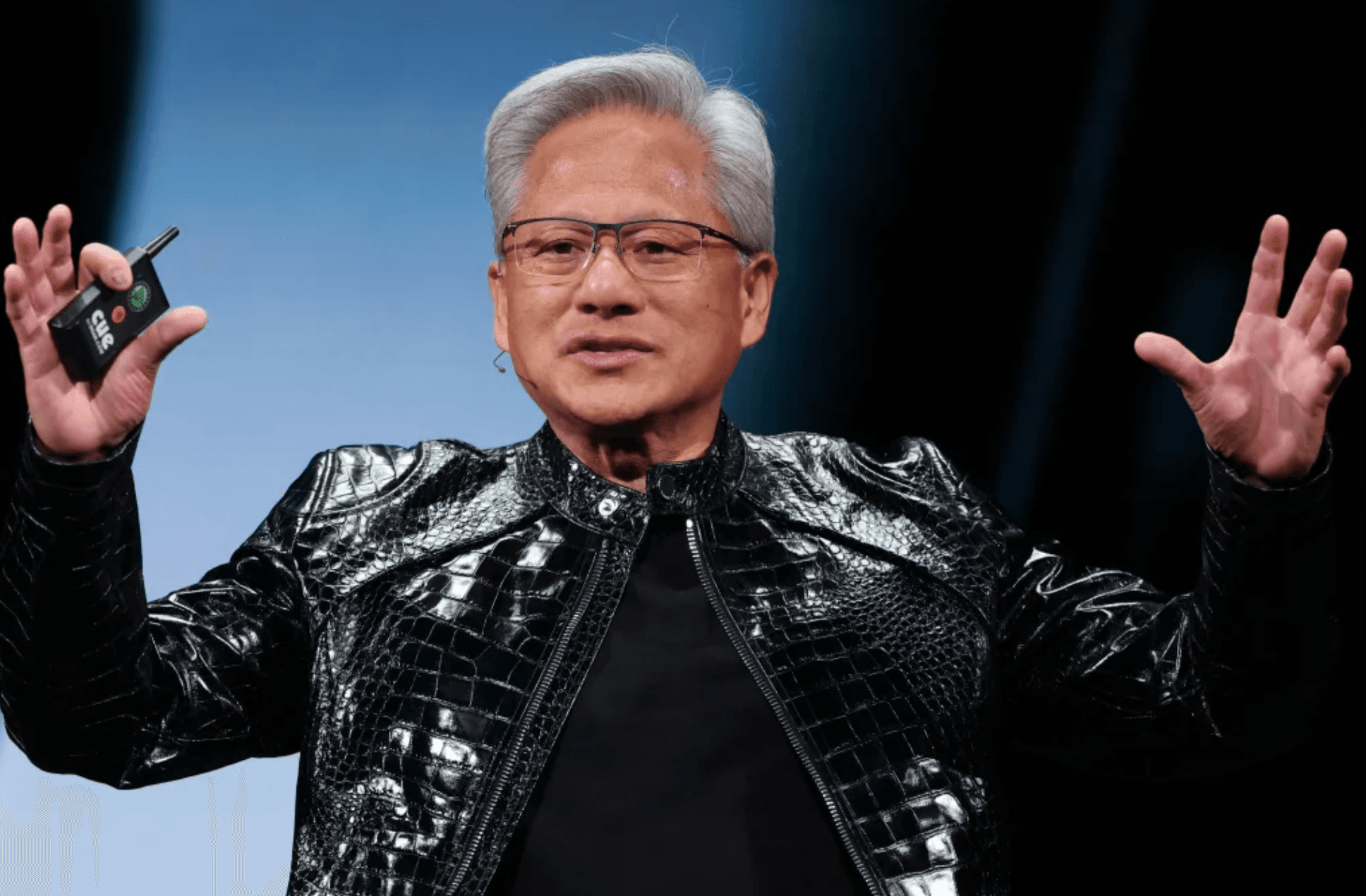
The metric isn't what the engineer shipped. It's how much of the compute tokens they burned. Somewhere a leaderboard lit up.
I'm a game designer, I know what leaderboards are designed to do. That, is what alarms me, Jensen! Are you selling AI tokens as the actual means to more productivity? Or are you selling me tokens so we have to buy more of your boards?
I don't buy it. Not the way it's being sold.
Tokens
The tech god's swear AI has produced the 100x engineer.
Huang says every engineer will soon run a hundred agents. Marc Andreessen frames AI as the "great enhancer of human intelligence." The vibe from the top is: more tokens, more output, more value, in a straight line up and to the right.
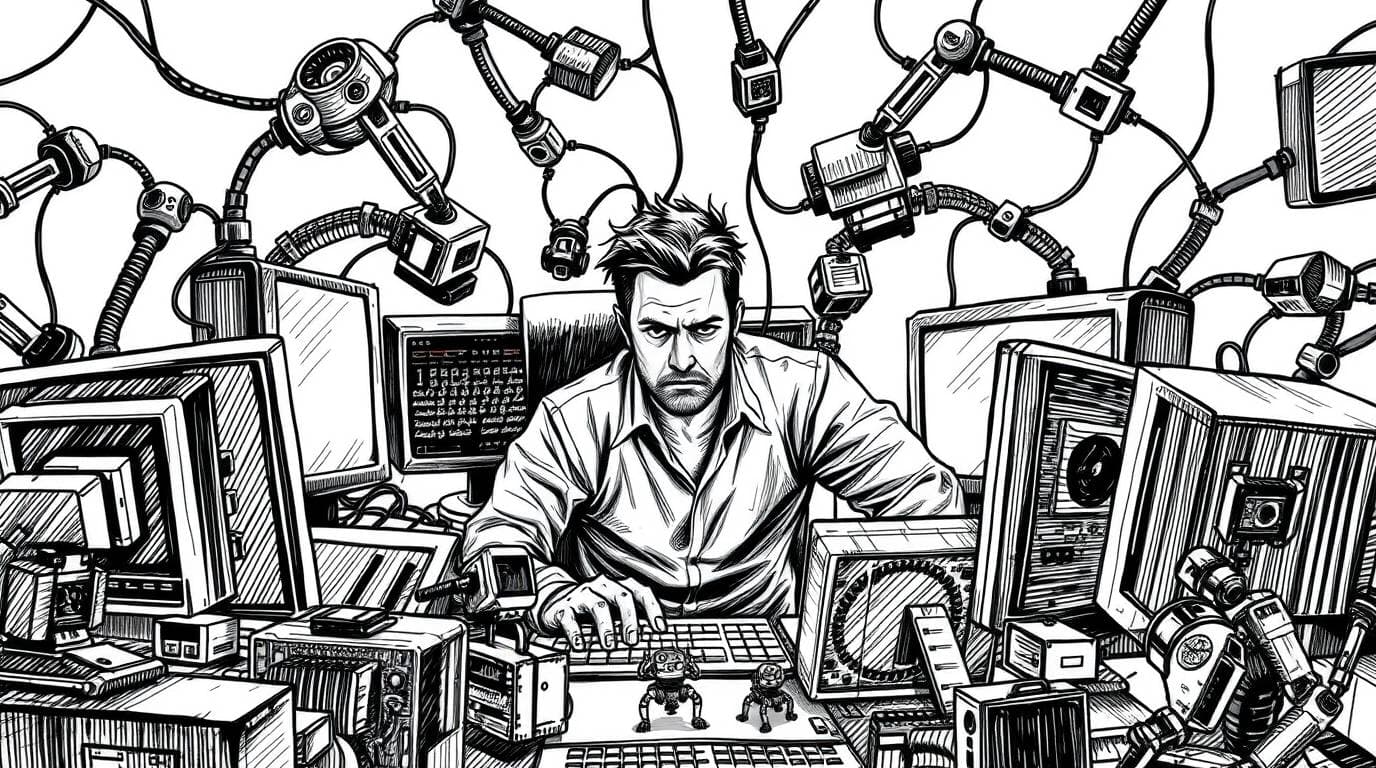
But it's easy to see what's actually being measured. Token spend. Agent count. These are numbers that describes consumption, not creation.
In 2025, METR ran a clean experiment: experienced open-source developers, working in codebases they'd lived in for years, doing real tasks. Half with AI, half without. The developers predicted AI would make them roughly 24% faster. Afterward, they were sure it had made them about 20% faster.
It made them 19% slower.
They felt faster the entire time. The friction of typing went away, so the brain registered "productivity," even as the clock said the opposite. AI is extraordinarily good at producing the sensation of speed, which is a different product from speed, which is a different product again from value.
The slot machine dopamine pull. The social media refresh, the game mechanic. Every time we prompt, we see how much comes back. That's context windows, not actual productive value.
I'm not saying the 100x engineer is fake. I'm saying I think it's mostly a 100x engineer who was already great, now augmented, and that the AI is getting credit the human earned.
Strip the token leaderboard away and ask the only question that matters:
did the work get better?
Most people can't answer that. They're counting what's easy to count.
The Friction you Keep
So if speed isn't the prize, what is friction worth?
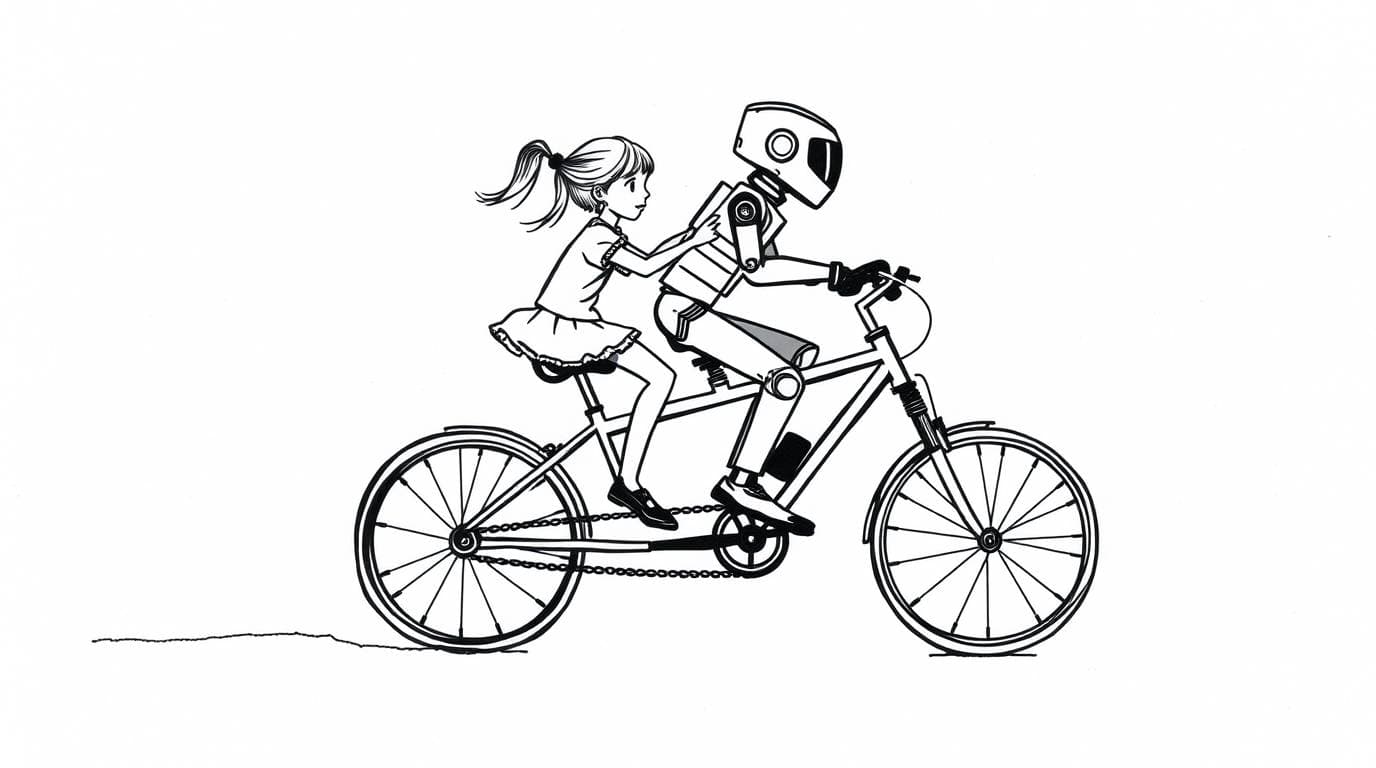
Mira Murati, now running Thinking Machines Lab, has an interesting metaphor for this. She says good AI isn't autopilot, it's a tandem bike. Both people pedaling, both hands on the wheel. "When you're going up a hill, whoever is stronger is pedaling harder."
The instinct is to read that as: let the machine take the hill. But as someone who is in education, I think the hill is the point. The hill is where you get stronger.
As an animator, I was genuinely good at camera, at movement, at the feel of a shot. And I was bad at lighting. I hated lighting, so I never pushed through the slow part, so I never got good. I built shortcuts. I partnered with people who lit beautifully.
It was knowing which hills were mine to climb.
There's friction you should shed, and friction you should keep.
Shed the friction on the work that isn't yours: the sales modeling, the formatting, the boilerplate, the parts where struggle teaches you nothing. Offload it. That's what the tandem bike is for.
But the friction on the work you actually love? I'm increasingly thinking that we ... Keep it. We double down on it. That resistance is perhaps good resistance. It's the process. Reading slowly, sketching the map by hand, wrestling a sentence until it holds. The struggle is where the skill lives. (Which is alarming for education.) Sand that struggle all away with AI and you don't get a better artist. You get a faster tourist.
The danger of a tool this good is that it makes every hill feel optional. And a person who never climbs a hill they care about doesn't become more productive.
Unfortunately, and likely. They become less of a craftsman.

Self-knowledge
Which brings me to what I actually think productivity is.
It isn't tokens. It isn't velocity. It isn't even output. I think it's knowing yourself.
Productivity is knowing yourself well enough to point your energy at the right thing.
I am wildly productive when I'm reading, analyzing, drawing, mapping a system, animating, teaching, doing UX, writing. Not because I'm faster at those things than anyone else, but because I'm aligned to them. The friction feels like play. In short, these are things I naturally like to do.
So I happily use AI to clear everything else off my desk, the business development (ugh!), the modeling, the nauseating emails to move class rooms and faculty, the admin (pee-eew!)..... all precisely so I can spend more of my hours in the few places I'm built for.
The question "is AI making me more productive?" is probably the wrong questions.
The one I'm trying to align to is: do I know where my value actually sits? Because if AI is an amplifier, then an amplifier pointed at noise just gives you louder noise. Point it at the work only you can do, and it compounds. Point it everywhere, chasing a token count, and you get the METR result, busier, convinced you're flying, quietly slower.
So, No. I don't think we're automatically more productive the second we open a chat window. That's a sales story designed to sell more computer, and the meter is on.
And tokens are expensive, bro!
We're more productive when we understand ourselves, when we know which hills to climb and which to coast, and when we aim this absurdly powerful tool adjacent to the work that's genuinely ours.
The machine can pedal. But you still have to know where you're going?
This is the debate we're all about to have, whether we want to or not. What does it mean for our students to be productive? Tokens have nothing to do with it. It's the work that matters.
Make it Happen.
Nye Warburton is a creative technologist and educator from Savannah, GA. These essays begin as improvisations with Otter.ai, are ingested into Obsidian, and then augmented with a variety of agentic tools.
For more information visit: https://nyewarburton.com
Research & Sources
Jensen Huang, $250K-in-tokens / "deeply alarmed" + "every engineer will have 100 agents": https://www.rdworldonline.com/nvidia-ceo-jensen-huang-says-spend-250k-on-ai-tokens-annually-or-hell-go-ape/ and https://www.digit.in/features/general/engineer-100-ai-agents-jensen-huang-future-of-work.html
METR (2025), experienced devs 19% slower with AI while believing they were ~20% faster: https://metr.org/blog/2025-07-10-early-2025-ai-experienced-os-dev-study/ · paper: https://arxiv.org/abs/2507.09089
Mira Murati, "tandem bike" / "both hands on the wheel," Bloomberg Tech 2026: https://www.benzinga.com/markets/tech/26/06/53046360/former-openai-cto-mira-murati-shares-stark-warning-about-ais-future-says-its-more-like-a-tandem-bike-than-autopilot and https://digg.com/ai/ne40446f
Marc Andreessen on AI enhancing human intelligence: https://x.com/pmarca/status/1768405196445561044
More from the Digital Lab
The Sprint Battlefield - On learning faster than your enemy.
Training Lil Brains to Play Games - On training robot minds with RL
My Predictions for 2026 - On the arrival of Agents, Open Source and the Edge
